
What to Expect
St. Tikhon Orthodox Church is a parish in the Diocese of the South of the Orthodox Church of America. When people visit different communities, they often encounter customs and local traditions that may be new to them.
Some of these are cultural; others are simply pious customs that have grown over time. What follows is meant to give a sense of what to expect at St. Tikhon, and more broadly reflects the general spirit of worship in the Orthodox Church in America (OCA). Our goal isn’t to make anyone feel anxious or unsure, but to offer a helpful orientation to common practices. Even among sincere, devoted people, it’s not unusual to have questions about these things, whether you grew up in the faith or came to it later in life.
This guide is meant for personal reflection and preparation, not as a way of judging others. Every community carries its own traditions, even within Orthodoxy. Above all, we gather to pray and worship God, and that remains the heart of it all. Along the way, you’ll notice customs and traditions that shape our worship—some shared across the whole Church, others unique to a parish or cultural background. Below are answers to questions often asked by those new to the faith, and by many who’ve been part of it for years.
First Time Visitors
+Standing vs. Sitting
The traditional posture for prayer and worship in the Orthodox Church is to stand. In many Orthodox Churches there are no pews. Chairs or benches on the side walls are reserved for those who need them, i.e. the elderly, infirm, pregnant mothers, etc. When in doubt, it is always acceptable to stand for the entire service. Regardless if you stand the whole service or not, there are times when one should definitely stand:
- The beginning of the service: “Blessed is the Kingdom…”
- The Entrances: with the Gospel and later, the Chalice
- Gospel Reading
- The Creed
- The Lord’s Prayer
- The Anaphora beginning with “Let us stand aright” through the Hymn to the Theotokos
- The distribution of Holy Communion, i.e. the Body and Blood of Christ in our midst, through the end of the dismissal.
Whatever parish you are in, when in doubt, follow the pattern of those around you. During the sermon, please do take a seat. On certain occasions when the Old Testament is being read, it is appropriate to sit until the reading is finished.
Lighting Candles
Lighting candles is an important part of Orthodox worship. We light them as we pray, making an offering to accompany our prayers. In the Orthodox church, we typically light candles upon entering the church, or after venerating the icons.
Venerating Icons
When you enter the church, it is traditional to venerate the icons. Usually there are icons at the entrance to the church and many churches have icon stands in the front as well. When venerating (kissing) an icon, pay attention to where you kiss. It is not proper to kiss an icon in the face. When you approach an icon to venerate it, kiss the gospel, scroll, or cross in the hand of the person in the icon, or kiss the hand or foot of the person depicted. And remember to blot off any lipstick or chapstick before kissing.
Making the Sign of the Cross
A person looking around on a Sunday morning may notice that different people cross themselves at different times. To a certain extent, when to cross oneself is a matter of personal piety and not of dogma. However, there are times in the service when crossing oneself (thumb and first two fingers touching each other, third and fourth fingers folded into the palm: touching head first, to stomach, right shoulder to left) is called for:
To cross: when you hear one of the variations of the phrase “Father, Son, and Holy Spirit”; before venerating an icon, Gospel, or Cross; entering and exiting the temple; during the Trisagion [Holy God, Holy Mighty, Holy Immortal]; at “Glory to Thee O Lord”; when passing before the Altar.
Not to Cross: (only bowing of the head): when blessed with hand (as in “Peace be unto all”), or censed. In receiving a blessing from a bishop or priest one does not make the sign of the Cross beforehand. “In this way ought we to distinguish between reverence toward holy things and toward persons”.
What do I do during the Censings?
There are many local customs dealing with the censing of the Church. In some places people move to the center of the Church and in others they stay where they are.
Here at St. Tikhon people should move away from the walls while the priest is censing. In general, while the priest or deacon is censing people should stop venerating the icons in the center of the Church. In practice, the priest censes the iconostasis, then censes the people. When he is doing this, he censes from the ambo from (the laity’s perspective) right to left. As he censes, he’ll bow, and as you are censed, you return a small bow as well.
When he steps off the ambo to cense the church, he will start often at the center icon, then move around to cense the walls of the church. At that time, please just step far enough from the wall to allow him a path. Please don’t feel the need to stand in the same direction of the priest while he censes around the church, you can just keep facing the altar. Also, this isn’t the time to bow towards the priest, because the priest is no longer censing you, but the icons that align the walls of the church.
A good rule of thumb is to always face the altar. If the priest is in the middle of the nave or the narthex during baptism or vigil, you may stand sideways, but do not give your back to the altar.
What to Wear
+Sunday Dress
Though God does not demand us to “dress up” for Him (as though He is in any way impressed by our external appearance), how we dress can be a reflection of how we feel. If we dress too casually, our attitudes might reflect this casualness in our worship. We should dress modestly, not in a flashy way that brings attention to ourselves.
Some Guidelines:
Children: Only young children are allowed to wear shorts to church—but preferably not athletic shorts, cutoffs, or “spandex”. Tennis shoes that “light up” should be avoided.
Women: Dresses, skirts and pants are all appropriate, just be sure they are modest.
Men: Clean shirts that avoid splashy logos and clean pants/slacks/jeans are always good choices. Again, shorts are to be avoided, particularly on Sunday morning.
The above guidelines may be adjusted for services outside of Divine Liturgy, i.e. Vespers. It is always preferable to be in church for prayer, than to not come at all for mere lack of a change of clothes—as may be the case when coming from a Saturday outing, work, or work-party, etc. Finally, this is not a call for someone to buy a whole new wardrobe just to be a part of the Church! Use your best judgment and good taste when it comes to Church. You don’t go to church to be seen by people—you go to present yourself before, and to worship, God.
Parking
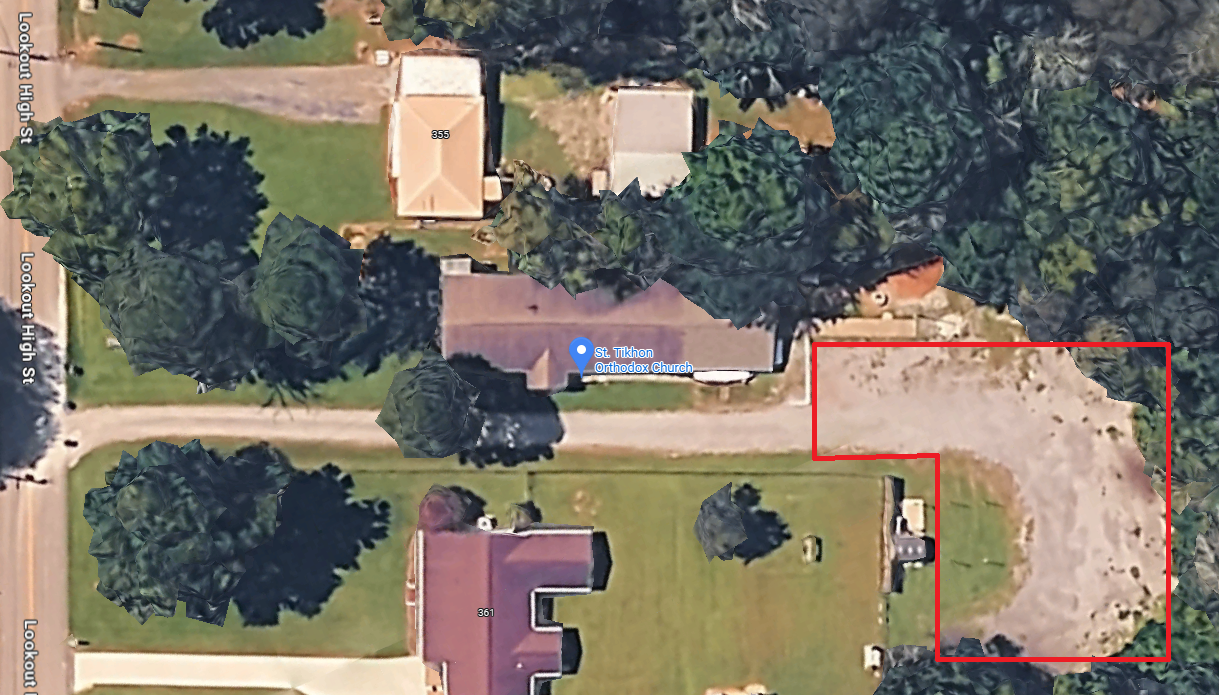
+Parking can fill up quickly, especially on Sunday mornings, so please plan to arrive a few minutes early to find a spot. The closest spots are reserved for those with mobility needs and for our elderly parishioners—please leave these spaces open if you are able to walk a short distance. Additional parking nearby is available if needed, however we try to reserve this parking lot for visitors, the elderly, and those with small children.
Children
+All Children are Welcome
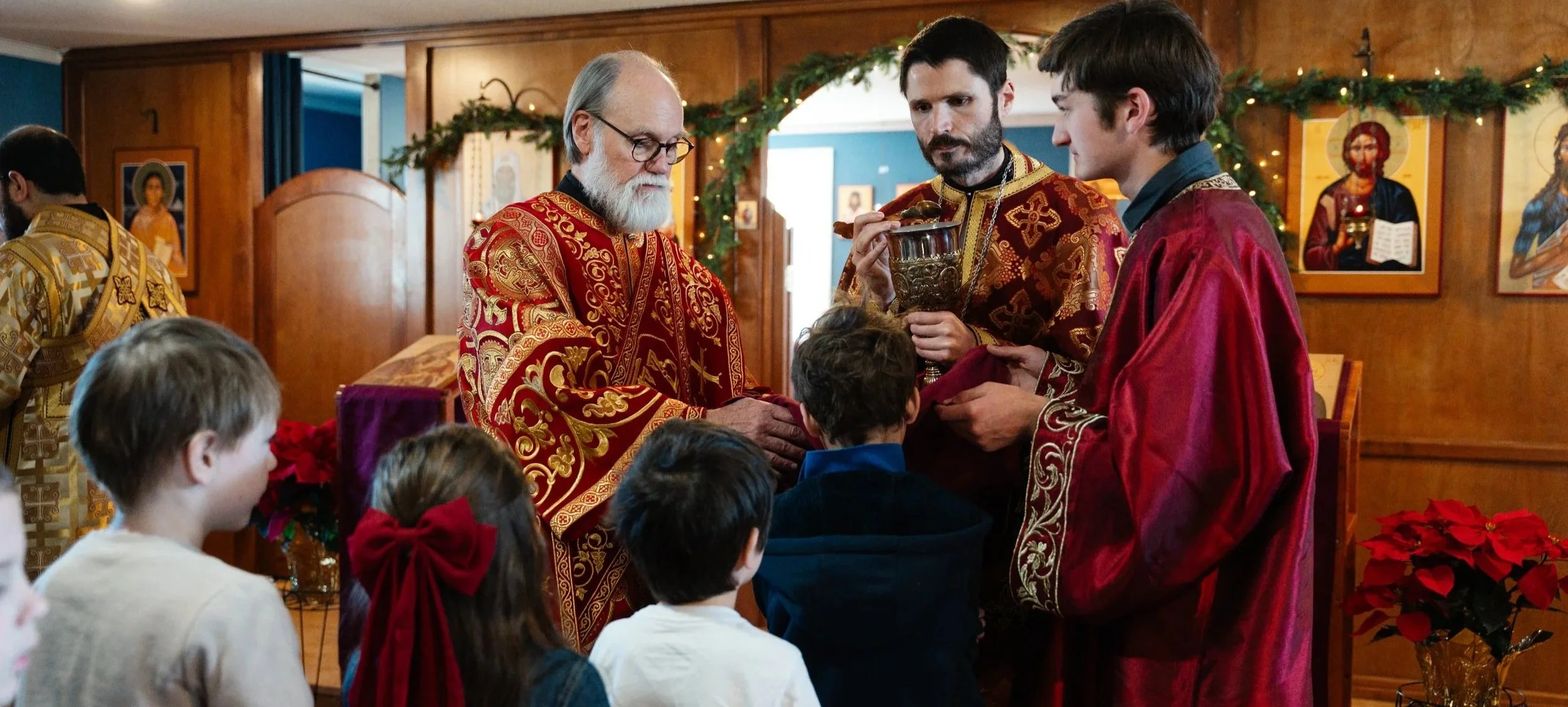
We warmly welcome your children! Please don’t worry that they’ll be a bother or a distraction—the sounds and movement of little ones are a natural and cherished part of our worship together. Children have always been part of the life of the Church, and we want you to feel completely at ease bringing them into the Nave rather than keeping them separate. In fact, we encourage families to involve their children in the Liturgy as much as possible—whether that’s holding them up to see the icons, letting them light a candle, or simply having them stand or sit beside you as they grow accustomed to the rhythm of the services. So please, don’t hesitate to bring your children all the way in with you.
In and Out
Certainly parents should have ready access to the doors to take small children out if they need a short break—for this reason the doors are to be accessible, i.e. let us avoid the temptation to congregate around the back doors, and challenge ourselves to move forward into the Nave.
Supervision
For the safety of all our children, no child—regardless of age—should be left unattended during the services. Please keep young children within arm’s reach, and older children should remain within sight and under the care of a parent or responsible adult at all times.
Worshipping alongside your children, even amid the wiggles and whispers, is one of the most meaningful gifts you can give them. It teaches them, from the earliest age, that they belong in the house of God—and that our life of prayer is truly a family affair.
General Etiquette
+Talking During Church
It is not appropriate to greet people and have a conversation with them during the services. This is especially true while in line for the Holy Eucharist. It is not appropriate for anyone to have conversation during communion, either before or after receiving the Eucharist. While it is a hospitable act to offer friends and visitors a piece of antidoron at this time, it is not the occasion for visiting or catching up with one another.
While waiting to receive communion, we ought to be in a state of prayerful preparation, after receiving, in a state of prayerful gratitude, and if not receiving, repenting and praying quietly—or else singing along with the communion hymn. It is likewise inappropriate to begin to chat during the prayers of thanksgiving.
Talk to God while in church through your prayers, hymns, and thanksgiving, and to your friends in the hall afterwards.
Leaving Before the Dismissal
Leaving church before the Dismissal deprives us of a blessing. The Liturgy has a beginning (“Blessed is the Kingdom…”) and an end (“Let us depart in peace…”). We live in a fast-paced world where we seem to be hurrying from place to place. But in God’s presence, we need to make every attempt to fight this pressure to move on to the next thing on the day’s agenda. We deprive ourselves of blessings by not being still and participating in God’s holiness. It is important to stay after Communion to complete our prayer and thank God for his precious gifts to us. So please stay in the Nave unless it’s your turn to help with food or taking care of a child.
When Entering and Leaving the Church
Getting kids ready, fighting traffic, etc. can all make arriving to church on time difficult. It’s also often necessary to leave the Nave and come back in. If you arrive after the Divine Liturgy begins, try to enter the church quietly – and observe what is happening. If the Epistle or Gospel is being read or the Little or Great Entrance is taking place, wait until it is finished to enter the church. If Father is giving the sermon, please come in, but stay in the back until he has concluded.
If you end up arriving late (especially after the Gospel) you should generally refrain from partaking of the Eucharist that day as “proper preparation” for Holy Communion typically includes the hearing of the gospel.
If the Anaphora is taking place, please refrain from entering the Church until the Hymn to the Theotokos (It is Truly Meet…)
Kiss (Don’t Shake) the Bishop’s and Priest’s Hand
The proper way to greet a bishop or priest is to ask his blessing and kiss his right hand. How do you do this? Approach the bishop or priest with your right hand over your left and say “Father” (“Master,” in the case of a bishop), “bless.” This is appropriate and traditional, rather than shaking their hands. When you receive such a blessing it is Christ Himself who offers the blessing through the hand of the priest or bishop.
Preparing for Communion
Part of the preparation for receiving the Holy Eucharist is fasting. Orthodox Christians are expected to fast at least from 12 midnight until they receive the Holy Mysteries unless for health reasons or medically unable. The fast includes abstaining from all food and drink. It is also expected that the married faithful will abstain from adult relations on the evening (from Vespers on) before receiving the Holy Eucharist.
Crossing One’s Legs
Generally, we tend to cross our legs to get comfortable. Is it “wrong” for us to cross our legs in Church? It’s less about it being “wrong” and more about it being maybe a little too casual—or maybe a little too relaxed—for being in the presence of God. When we get settled in our favorite chair at home, we lean back, kick up our legs, and allow our minds to wander. This is the opposite of what we want to do in Church. Our goal is to remain attentive (i.e.: “Let us attend”) at all times. Distractions will always seek to keep our minds and hearts away from God, so we seek to do what we need in order to keep that from happening. If you need to sit, try to do so in a way that keeps you attentive and not too comfortable that our minds wander off of the “one thing necessary.”
Handling the Holy Bread / “Antidoron”
After taking Communion, at the end of the Divine Liturgy, and at Vespers with a “Litya” or “Blessing of Bread”, it is traditional to eat a piece of holy bread or antidoron—the left-over bread from which Holy Communion was prepared and various commemorations made. While antidoron is not the Body and Blood of Christ, it is blessed bread, and as such, we should take precaution to eat it carefully so that crumbs don’t fall to be trampled underfoot.
